
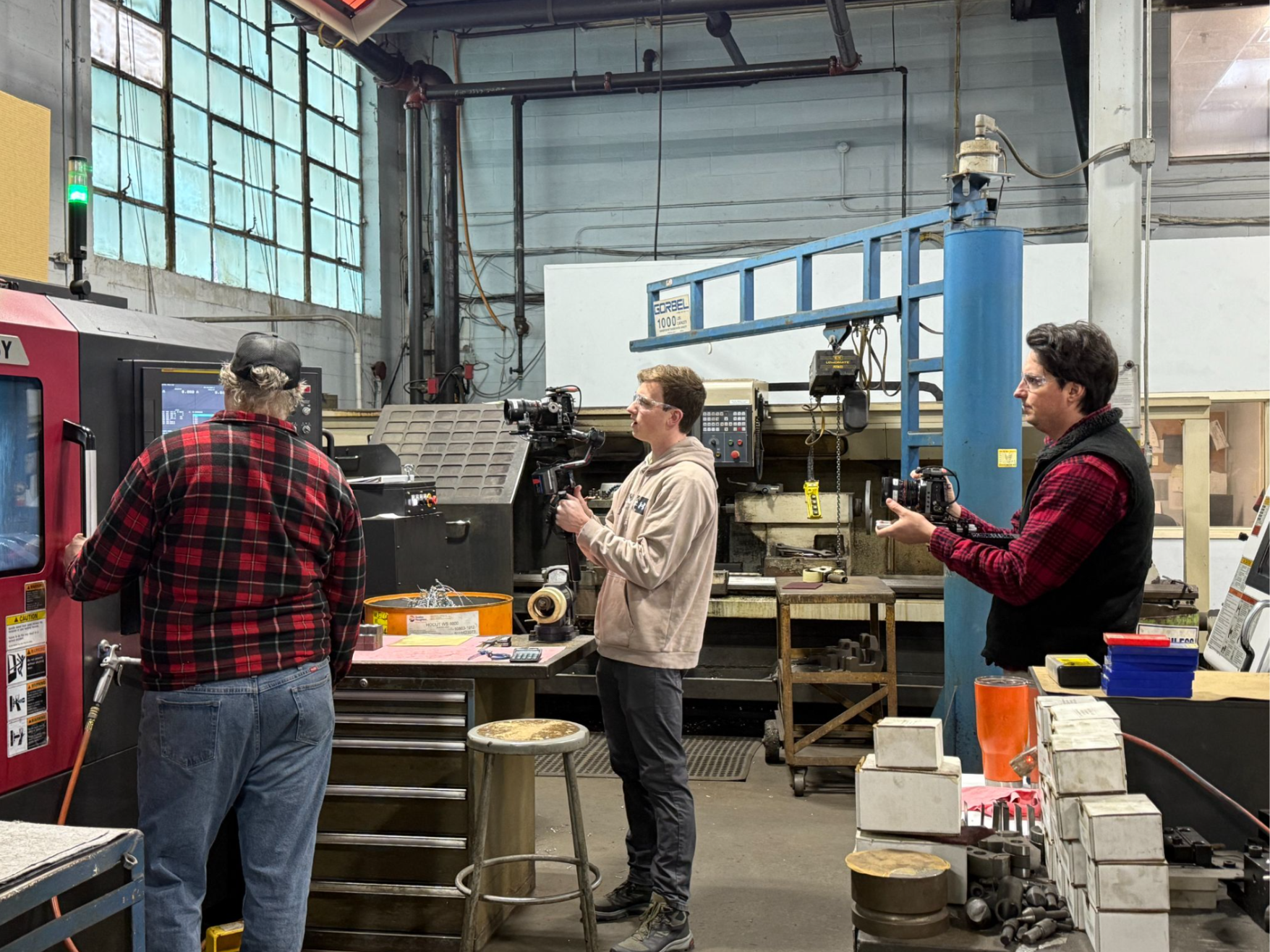
Hiring has always been expensive, but in today’s market, slow hiring is more than an HR problem. It becomes an operational problem, a revenue problem, a customer experience problem, and eventually, a culture problem. When your company does not have the people it needs, work slows down. Teams stretch thin. Managers spend more time covering gaps. Client delivery schedules get pushed. Employees burn out. Candidates lose interest. Customers feel the difference.
And when a company finally does make a hire, the stakes are even higher. The wrong hire does not simply create an awkward fit. It can cost months of time, thousands of dollars, internal momentum, team morale, and sometimes even customer trust. That is why recruiting video should not be viewed as a “nice-to-have” employer brand asset. It should be viewed as a practical hiring tool that helps the right people understand your company faster, decide with more confidence, and move through the hiring process with a clearer sense of fit.
For HR leaders, talent acquisition teams, and growing companies, the question is not simply, “Can we afford to invest in recruiting video?” The better question is, “How much are we already spending because we do not have the right recruiting content working for us?”
The Hidden Cost of Weak Recruiting Content
Most companies are already investing heavily in hiring. They are paying for job postings, recruiters, internal HR time, interviews, onboarding, background checks, career fairs, referral programs, and sometimes outside recruiting firms. They are asking department leaders to spend hours reviewing candidates and sitting in interviews. They are asking teams to keep producing while positions stay open.
But too often, the content used to attract candidates is still thin. A job description. A few bullet points. Maybe a careers page with polished language about culture. Maybe a handful of employee photos. Maybe a paragraph about values that sounds a lot like every other company’s values. That may check the box, but it does not always move people.
Candidates are not just asking whether they can do the job. They are trying to decide whether they can see themselves at your company. They want to know if the people seem like people they would want to work with. They want to know if the company is serious about culture or just saying the right things. They want to know if they will grow, if they will belong, and if the opportunity is worth leaving where they are now.
A job description can explain the role, but video helps candidates feel the opportunity. That difference matters. Job postings with video icons are viewed 12% more and have a 34% greater application rate than those without. Candidates who watch a recruiting video are 64% more likely to apply. And 80% of talent acquisition professionals say video helped increase application volume, while 78% say it improved the quality of applications.
That is not just a marketing stat. That is a hiring advantage.
Recruiting Video Helps the Right Candidates Move Faster
One of the biggest challenges in hiring is not just finding candidates. It is helping the right candidates make a confident decision. That is especially true when you are trying to reach people who are already employed. Passive candidates are not sitting around refreshing your careers page. They are busy. They may be open to the right opportunity, but they are not actively hunting for it. They need a reason to pause, a reason to care, and a reason to picture themselves somewhere new.
Video is built for that moment. A short recruiting video can stop someone mid-scroll and create curiosity. It can introduce your people, show your environment, communicate your values, and make the opportunity feel real in a way plain text rarely does. That matters because 88% of recruiters who use video in recruiting say it generates more responses from passive candidates. Video posts on LinkedIn are also shared 20 times more than other content types, giving employer brand content more potential reach in the places candidates already spend time.
But the best recruiting video strategy does not rely on one big culture video to do everything. It works more like a connected candidate journey. A short video creates the first spark. It may live on LinkedIn, Instagram, Facebook, paid social, a job posting, or in a recruiter’s outreach message. Its job is simple: earn attention and give the candidate one clear reason to care.
Then, once the candidate is interested, a longer video can do the deeper work. It can live on the careers page, YouTube, recruiting presentations, candidate follow-up emails, or onboarding materials. Its job is to build belief. It gives candidates a fuller picture of the people, culture, purpose, leadership, growth opportunities, and day-to-day experience.
Together, those videos create a recruiting path from awareness to interest to confidence to action. The short videos create reach. The longer video builds trust. Used together, they help candidates move from “I saw the opening” to “I can actually see myself working there.” That kind of strategic recruiting video funnel was the core recommendation in the attached client example, where shorter differentiator videos were designed to create first attention and a longer video served as the deeper proof point for candidates who wanted to understand the company more fully.
That is where time-to-hire can start to change. When candidates better understand the opportunity earlier, they self-select more quickly. The wrong people may opt out sooner. The right people may lean in faster. Recruiters have better tools for follow-up. Hiring managers spend less time explaining the same cultural differentiators over and over. Video does not replace the recruiting process. It makes the recruiting process work harder.
Better Culture Alignment Means Fewer Expensive Surprises
Every HR leader knows this truth: the best candidate on paper is not always the best person for the company. Skills matter. Experience matters. But culture alignment matters too.
A candidate may have the right resume and still struggle if the environment, pace, expectations, management style, team structure, or values are not a fit. And when that happens, the cost is not limited to replacing the employee. The team absorbs the disruption. Managers spend time coaching, correcting, or restarting the search. Morale can take a hit. Customers may feel the inconsistency. Other employees may wonder why the company keeps hiring people who do not last.
Recruiting video helps reduce that risk because it gives candidates a more honest preview of the company before they apply, interview, or accept. That does not mean creating a fake-perfect version of your workplace. In fact, it means the opposite. The best recruiting videos are not corporate wallpaper. They are specific, human, clear, and real.
They show actual employees. They let people talk about the work in their own words. They reveal what the company values. They give candidates a sense of the pace, environment, leadership, mission, and expectations. That kind of clarity helps both sides. Candidates can decide whether the opportunity feels right, and employers can attract people who are more aligned from the beginning.
According to the stats provided, using culture videos can reduce turnover by 28% through better alignment of values and fit. That is a big deal because turnover is one of the most expensive forms of waste in a business. It is not always visible on one line of a budget, but it shows up everywhere: recruiting costs, lost productivity, management time, team strain, onboarding time, customer disruption, and missed momentum.
When a video helps one better-fit employee say yes, or helps one poor-fit candidate say no, it can create real financial value.
One Bad Hire Can Cost More Than the Video
This is where recruiting video stops looking like a creative expense and starts looking like a smart financial decision. A common benchmark is that turnover costs approximately 50% of an employee’s first-year salary, and some estimates go much higher depending on the role, seniority, ramp time, and business impact. Even using the conservative 50% benchmark, the math gets serious quickly.
If an employee earns $68,000 per year, replacing that person could cost approximately $34,000. A recruiting video investment in the $10,000 to $15,000 range is a fraction of that. If the video helps prevent one poor-fit hire, retain one better-aligned employee, or convert one strong candidate who may not have applied otherwise, the investment can more than pay for itself.
Now scale that across a real hiring push. Imagine a company in growth mode trying to hire 30 to 45 people over the next six months. Even at a conservative average salary of $68,000, that represents roughly $2 million to $3.1 million or more in annual payroll tied to the hiring initiative. In that context, a $10,000 to $15,000 recruiting video investment is not a major expense. It is a small percentage of the overall hiring effort.
The real risk is not spending money on video. The real risk is spending millions on hiring while relying on weak content to attract, educate, and convert candidates. That is the financial case HR leaders can bring to the table. Recruiting video is not about making the company look cool. It is about helping the business make better hiring decisions faster, with stronger candidate alignment and less waste.
Slow Hiring Has an Opportunity Cost
Turnover is expensive. Bad hires are expensive. But unfilled seats are expensive too. This cost can be harder to measure because it is not always a direct invoice. It is the work that does not get done. The project that takes longer than it should. The customer that waits. The team that absorbs the extra load. The manager who spends more time covering gaps than leading strategically.
When a company does not have the people it needs, the cost shows up in many places. Client delivery slows down. Sales opportunities get delayed. Existing employees burn out. Quality slips. Leaders become reactive. Customers feel less supported. Growth plans stall.
Hiring is not separate from operations. Hiring is how the company builds the capacity to deliver on what it has already promised. That is why reduced time-to-hire matters. Filling roles faster is not just good for HR metrics. It can help the business protect revenue, maintain service levels, and keep teams focused on the work they were hired to do.
Recruiting video supports that by giving HR and recruiting teams reusable assets that can work across the entire hiring process: social media, paid campaigns, job postings, career pages, recruiter outreach, interview follow-up, hiring events, onboarding, and internal referrals. Instead of explaining the culture from scratch every time, your people can show it. Instead of hoping candidates understand what makes your company different, you can help them see it. Instead of treating employer brand as a static paragraph on your website, you can turn it into content that actively supports hiring.
Employer Brand Is Not Just About Recruiting. It Is About Reputation.
There is another risk companies sometimes underestimate: what happens when hiring challenges start affecting the customer experience. Customers usually do not care that your company is understaffed. They care whether the work gets done well.
If you do not have the people you need, customers may experience slower response times, missed deadlines, inconsistent service, lower quality, or stressed teams. Even if they are sympathetic, they still have expectations. And when service slips, reputation is at risk.
That means recruiting is connected to brand reputation in a very real way. Your ability to attract and retain talent affects your ability to serve customers. Your ability to serve customers affects your reputation. Your reputation affects future sales, referrals, retention, and growth.
HR leaders already know people are the business. But sometimes, leadership teams need to see the financial connection more clearly. Recruiting video helps make that connection visible because it strengthens the front end of the hiring process. It gives companies a better way to communicate who they are, what they value, why the work matters, and why the right people should want to join them.
It does not solve every hiring challenge, but it gives the company a stronger tool to compete for attention, build trust, and attract people who are more likely to fit.
Candidates Want More Than a Job Description
Today’s candidates are doing their homework. They are looking at your website. They are checking LinkedIn. They are reading reviews. They are watching how your company presents itself. They are trying to figure out whether the words in the job posting match the reality of the workplace.
The stats support this. Seventy-five percent of job seekers consider an employer’s brand before applying, and 78% of people say they prefer a short video to learn about a company or position. That should matter to every HR leader because if candidates are already evaluating your employer brand before they apply, the absence of strong recruiting content is still communicating something.
It may suggest that your company has not clearly defined why someone should work there. It may make candidates work too hard to understand your culture. It may force a job description to carry the whole burden of attracting talent. That may not be the message you intend to send, but candidates are forming impressions either way.
Video gives you a better way to shape those impressions. Not by manufacturing a fake story, but by revealing the real one.
Video Also Supports Onboarding and Retention
The value of recruiting video does not have to stop once the candidate applies. A strong employer brand video or culture video can continue supporting the employee experience after the offer is accepted. It can reinforce expectations, introduce values, create consistency, and help new hires feel connected before they even walk through the door.
That matters because onboarding and retention are closely linked. Employees who experience structured onboarding are 69% more likely to stay three years or more. Organizations with strong onboarding see 82% higher retention rates and productivity increases of more than 70%. Standard onboarding processes can also lead to 50% higher employee retention.
Video can play a valuable role in that structure. It can introduce leaders, explain culture, clarify expectations, show safety practices, train consistently, welcome new hires, and reinforce purpose. In other words, recruiting video can become part of a larger talent strategy. It can help attract people, convert candidates, onboard employees, and reinforce culture over time.
That is where the investment becomes even more valuable. One shoot can create multiple pieces of content. One video strategy can support multiple stages of the employee journey. One set of stories can help HR, recruiting, internal communications, training, and leadership all pull in the same direction.
The Best Recruiting Videos Are Strategic, Not Random
The companies that get the most value from recruiting video usually do not start with, “We need a video.” They start with better questions. Who are we trying to attract? What do those candidates care about? What misconceptions do they have about us? What makes someone a great fit here? Why do employees stay? What do candidates need to believe before they apply? Where are we losing people in the hiring process? What roles are hardest to fill? What does our current content fail to communicate?
From there, the video strategy becomes much clearer. A company might need a main employer brand video for the careers page. It might need short social videos for passive candidates. It might need role-specific videos for hard-to-fill positions. It might need employee story videos to show growth opportunities. It might need onboarding videos to create consistency after the hire.
The point is not to create content for content’s sake. The point is to build a recruiting video system that helps the right people move from awareness to confidence to action. That is why video works best when it is built around the hiring journey, not just the company’s favorite talking points.
Recruiting Video Makes Good Financial Sense
HR leaders are often asked to do more with less. Fill roles faster. Improve candidate quality. Reduce turnover. Strengthen culture. Support growth. Protect employee engagement. Improve onboarding. Help the business compete for talent.
That is a lot to ask from job descriptions and career page copy alone.
Recruiting video gives HR leaders a stronger tool because it helps candidates understand the company faster, feel the culture sooner, and make better-informed decisions earlier in the process. That can lead to more applicants, better applicants, stronger alignment, faster hiring, improved retention, and less money lost to poor-fit hires or unfilled roles.
And when you compare the cost of video to the cost of one bad hire, one delayed project, one open seat that lingers too long, or one client relationship strained by lack of capacity, the investment starts to look very practical.
You are already paying for recruiting. You may already be paying for turnover. You may already be paying for slow hiring. You may already be paying for missed capacity. You may already be paying for weak employer brand content.
Recruiting video helps turn that spending into something more strategic. It gives your company a reusable asset that works across channels, supports recruiters, strengthens employer brand, improves candidate understanding, and helps the right people see why they should join your team.
And in a hiring market where attention is hard to earn, and fit is expensive to get wrong, that is not just good marketing. That is good business.
Ready to Strengthen Your Employer Brand and Recruiting Strategy?
If your company is growing, hiring, or struggling to attract the right people, video can help you tell a clearer, more compelling story. At SpotOn Productions, we help businesses create bespoke video strategies that support employer brand, recruiting, onboarding, and retention so you can attract, hire, and retain top talent with content that actually works. Hear one of our success stories.
Schedule a call with SpotOn Productions to discuss your video strategy for employer brand and recruiting. Because using video to attract, hire, and retain the right people does not just look good. It makes good financial sense.