
Most organizations are pretty good at spotting the big threats.
Supply chain disruption. Labor shortages. Rising costs. Regulatory changes. Safety concerns. Customer expectations. These are the kinds of challenges that show up in leadership meetings, budget conversations, and strategic plans.
But one of the most expensive problems inside a business is often much harder to see.
Poor communication.
Not the obvious kind. Not a public relations crisis. I’m talking about the everyday communication gaps that quietly slow teams down. The repeated questions. The inconsistent explanations. The unclear process updates. The training that happens once but is never reinforced. The important details that get passed along by word of mouth from person to person, shift to shift, and location to location.
On their own, these moments may not seem like a big deal. But over time, they create real costs. Productivity suffers. Quality becomes inconsistent. Safety messages lose impact. New employees take longer to get up to speed. Managers spend valuable time answering the same questions again and again.
For leaders, that means time, money, and momentum are being lost in ways that are easy to miss.
The Cost of Repeating the Same Information
Think about how often managers, supervisors, trainers, or experienced employees explain the same thing.
How do I submit this report? What is the right way to complete this task? Where do I find that information? Which version of the process are we supposed to follow?
Each conversation may only take a few minutes. But when those minutes are multiplied across departments, shifts, locations, and new hires, the cost adds up quickly.
Highly skilled employees spend time repeating information instead of focusing on higher-value work. New employees may receive slightly different answers depending on who they ask. Important knowledge stays trapped in individual conversations instead of becoming a consistent resource for the whole organization.
That creates frustration for employees and inefficiency for the business. It also keeps managers stuck in a cycle of clarifying, correcting, and repeating instead of leading.
That is not just part of the job. It is a communication problem.
And it is costing you more than you think.
When Inconsistent Messaging Creates Operational Risk
Communication becomes even more costly when the message changes from person to person.
Many companies rely on emails, meetings, PDFs, verbal instructions, and quick explanations to communicate important information. All of those tools have their place, but they also leave room for interpretation.
One leader emphasizes speed. Another emphasizes quality. Someone else explains the process based on how they have always done it. Before long, employees are following different versions of what was supposed to be one standard.
That is where communication gaps become operational risk.
You may see it show up as rework, quality issues, customer service inconsistencies, compliance concerns, delays, or missed expectations. The problem may look like a performance issue on the surface, but the root cause is often that people were never given a clear, consistent message in the first place.
When employees hear different things from different people, confusion is inevitable. When they hear the same clear message, expectations become easier to understand, follow, and reinforce.
Training Gaps Do Not Always Show Up Right Away
A lot of organizations treat training as something that happens during onboarding. Once a new employee completes the required steps, the box is checked, and everyone moves on.
But in reality, that is often where the communication challenge begins.
People forget information. Processes change. Expectations evolve. New risks emerge. And when employees do not have easy access to clear reinforcement, they naturally rely on memory, coworkers, or shortcuts.
That is especially risky in industries where procedures need to be followed carefully, including manufacturing, construction, logistics, healthcare, food and beverage, and field services.
The challenge is that training gaps do not always reveal themselves immediately. They may show up weeks or months later as an error, a quality issue, a compliance concern, a safety incident, or a frustrated customer.
By that point, the original opportunity to communicate clearly has already passed.
For companies, better communication means fewer avoidable mistakes. For managers, it means less retraining after the fact. For employees, it means more confidence because they have access to the information they need when they need it.
Safety Communication Is Too Important to Leave to Chance
For safety leaders, communication gaps can carry an even higher cost.
A missed detail, a misunderstood procedure, or an inconsistent explanation can have real consequences. Safety programs depend on people understanding procedures, hazards, equipment operation, emergency protocols, PPE requirements, and regulatory expectations.
The issue is not always the quality of the information. In many cases, the information exists. The problem is how consistently it is delivered, reinforced, and remembered.
When safety expectations are communicated clearly and repeatedly, employees are more likely to understand what is expected and why it matters. That consistency helps create stronger cultures of accountability, awareness, and compliance.
Safety communication should not depend on who happens to be explaining it that day.
The Productivity Drain Nobody Talks About
One of the most overlooked costs of poor communication is the cumulative effect on productivity.
Employees spend time searching for information. Managers spend time answering repetitive questions. Teams spend time correcting misunderstandings. Departments spend time fixing preventable mistakes.
Individually, those activities may seem small. Collectively, they can consume hundreds or even thousands of hours each year.
Many organizations look for efficiency through new technology, automation, staffing changes, or process improvements. Those can all be valuable, but they may miss a simpler question:
How much time are we losing because people do not have clear, consistent information when they need it?
For a growing company, better communication can help new hires ramp up faster. For a multi-location company, it can create consistency across teams. For a safety-focused organization, it can reinforce critical expectations. For a leadership team, it can free up managers to spend less time repeating themselves and more time leading.
Better communication does not just make things clearer. It helps the business run better.
Turning Communication Into a Competitive Advantage
The best communicators are not necessarily saying more. They are saying what matters more clearly, more consistently, and in a way people can understand, retain, and act on.
They reduce reliance on tribal knowledge. They standardize critical messages. They make important information accessible across departments, locations, and shifts. They recognize that communication is not only an HR function, a training initiative, or a leadership responsibility.
It is an operational strategy.
When employees hear the same message, understand the same expectations, and have access to the same information, companies operate better. Productivity improves. Quality becomes more consistent. Safety messages are reinforced. New employees ramp up faster. Leaders spend less time repeating themselves and more time moving the business forward.
That is not just better communication.
That is better business.
Final Thought
Many companies spend significant time and money trying to solve problems that are actually symptoms of unclear communication.
Before investing in another process improvement initiative, it may be worth asking where communication gaps are creating confusion, inconsistency, or unnecessary work inside your organization.
Are managers answering the same questions over and over? Are employees receiving different versions of the same message? Are training expectations being forgotten after onboarding? Are safety procedures being explained differently depending on the supervisor, shift, or location?
If the answer is yes, video can help.
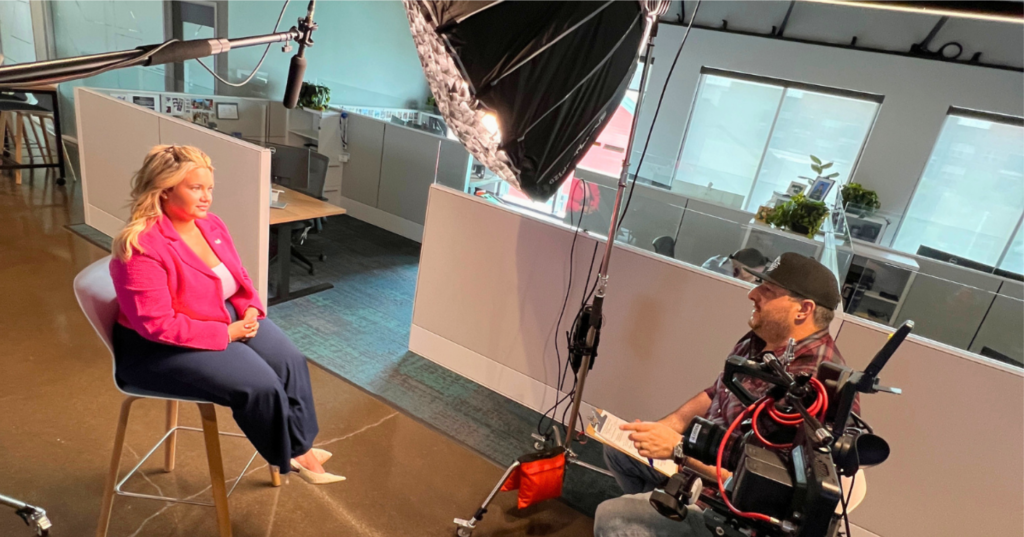
At SpotOn Productions, we help companies turn important messages into clear, consistent video content employees can actually understand, remember, and use. Whether it is training, safety, onboarding, internal communication, or process education, the right video gives your team a reliable resource they can return to again and again.
If your teams are relying too heavily on repeated explanations, inconsistent training, or word-of-mouth communication, let’s talk.
SpotOn Productions can help you create video content that brings clarity to your workforce, consistency to your message, and confidence to the people responsible for doing the work.
Contact SpotOn Productions to start the conversation on how video can help close your communication gaps.