
Every organization wants its employees to go home safely at the end of the day.
Companies spend significant time developing workplace safety procedures, conducting training, posting reminders, and holding toolbox talks. Yet incidents still happen. Sometimes an employee knowingly ignores a rule, but often the problem begins much earlier: the safety message was delivered, but it was not fully understood, remembered, or applied.
That creates a gap between what leadership believes it has communicated and what employees actually do when the situation matters.
Closing that gap does not always require more training. It often requires a clearer and more consistent workplace safety communication strategy.
Delivering a Safety Message Is Not the Same as Creating Understanding
A supervisor explains a new procedure during a morning meeting. An email announces a policy change. Employees complete an online module and pass a quiz.
From leadership’s perspective, the message has been communicated.
But employees are processing production schedules, customer demands, equipment issues, shift changes, interruptions, and dozens of other priorities. Even an important safety update can quickly become background noise when it is delivered alongside everything else.
The result may not be outright noncompliance. More often, it is inconsistency. One employee remembers the procedure correctly. Another misses an important step. A supervisor explains it differently to another shift.
The company technically communicated the information, but it did not create a shared understanding of what safe performance looks like.
Why Workplace Safety Messages Get Lost
Most communication breakdowns are not caused by a lack of effort. They happen because employees absorb information in different ways and apply it under different conditions.
A new employee may understand the rule but lack the experience to recognize when it applies. A veteran employee may rely on years of habit rather than a recently updated process. A frontline supervisor may unintentionally emphasize one part of a procedure while overlooking another.
Written policies and presentations also leave room for interpretation. This becomes especially challenging when the procedure involves several physical steps or depends on employees noticing a specific hazard.
Knowing what a policy says is not always enough. Employees need to understand what it looks like in practice.
Show Employees What “Right” Looks Like
Many workplace safety procedures are easier to understand when employees can see them performed correctly.
Lockout/tagout, machine operation, lifting techniques, confined-space entry, personal protective equipment, and emergency response can be difficult to communicate through text alone. A written procedure may explain the steps, but a visual demonstration shows employees how those steps fit together in the actual work environment.
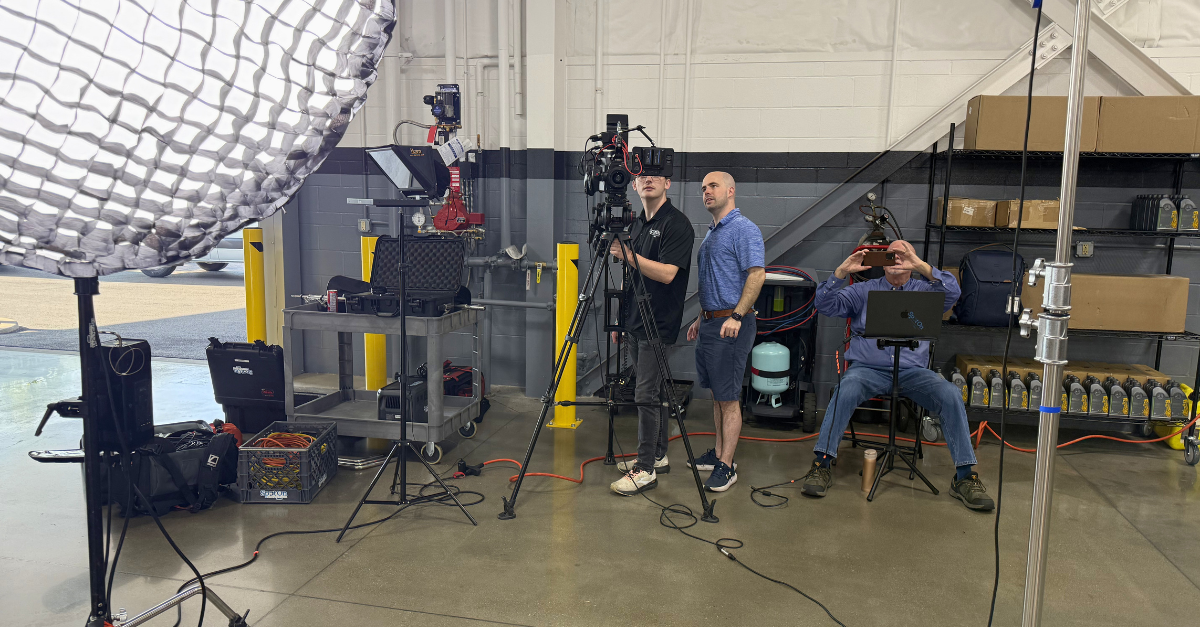
Well-planned safety training videos can also show common mistakes, explain why each step matters, and provide a consistent example employees can revisit later.
That reduces ambiguity. Employees are no longer trying to interpret what the policy means for their job. They can see the correct behavior in context.
For safety leaders, that can mean fewer repeated explanations, more productive coaching conversations, and greater confidence that employees across different shifts and facilities are receiving the same core message.
Create Consistent Multi-Location Safety Training
Consistency becomes even harder for organizations with multiple facilities.
When training depends on different supervisors, trainers, or site leaders, the message naturally changes. One trainer may spend more time on a particular step. Another may use a different example. Over time, small differences can lead to very different interpretations of the same procedure.
For organizations managing multi-location safety training, video creates a common starting point. Every employee can receive the same explanation and see the same demonstration, regardless of location, shift, or hire date.
This does not replace the role of safety leaders or supervisors. It allows them to spend less time repeating the same presentation and more time answering questions, observing behavior, and helping employees apply the information to their work.
It can also make employee safety training and onboarding more efficient. New employees do not have to wait for the next scheduled session or for a trainer to travel to their location. They can begin learning immediately and return to the material whenever they need a refresher.
Make Safety Communication Feel Human
Employees do not build trust with policies. They build trust with people.
When a respected supervisor, experienced operator, safety manager, or company leader explains a procedure on camera, the message feels more relevant and credible. Featuring actual employees in the real environments where the work happens can make the content even more effective.
It signals that safety is not simply a corporate requirement. It is part of how the organization expects work to be done.
That familiarity can also help employees pay attention. A message delivered by someone they know, in a setting they recognize, is more likely to feel applicable than a generic training video that could belong to any company.
Reinforce the Message After Training Ends
Orientation and annual training matter, but employees need more than one exposure to an important safety message.
Short refresher videos can support toolbox talks, digital signage, incident follow-ups, seasonal reminders, and supervisor coaching. The same core message can be adapted for different situations without requiring the safety team to start over each time.
This creates repetition without simply replaying the same long training session.
Over time, employees become more familiar with the expectation, supervisors have a consistent reference point, and safe behavior becomes easier to recognize and reinforce.
Measure Understanding, Not Just Completion
Training completion is easy to track. Understanding is harder.
A completed module or passed quiz does not necessarily mean an employee can perform the procedure correctly under real working conditions.
A better question is whether employees can confidently explain and demonstrate the correct process without referring back to the manual.
That shifts the focus from proving that training occurred to determining whether the communication actually worked.
Clearer Safety Communication Helps Build a Safer Workplace
Employees make safety decisions long before an incident occurs. Those decisions are shaped by what they were taught, what they remember, what they see others do, and how clearly the organization has defined the right behavior.
When workplace safety communication becomes more visual, consistent, and relevant to the work employees perform, it becomes easier to understand and apply.
That can help reduce confusion, improve training consistency, strengthen onboarding, and give safety leaders more time to focus on coaching and prevention rather than repeating the same information.
Help Your Safety Messages Stick
Whether you are training employees at one facility or twenty, your safety communication should be clear, consistent, and easy to scale.
SpotOn Productions helps organizations turn complex workplace safety procedures into strategic video content that employees can understand, remember, and apply. From onboarding and procedure demonstrations to refresher videos and multi-location safety training, we help safety leaders create a reliable communication tool that supports their people long after the initial training session ends.
If your team is spending too much time repeating safety information or struggling to deliver a consistent message across locations, let’s talk about how video can help.